
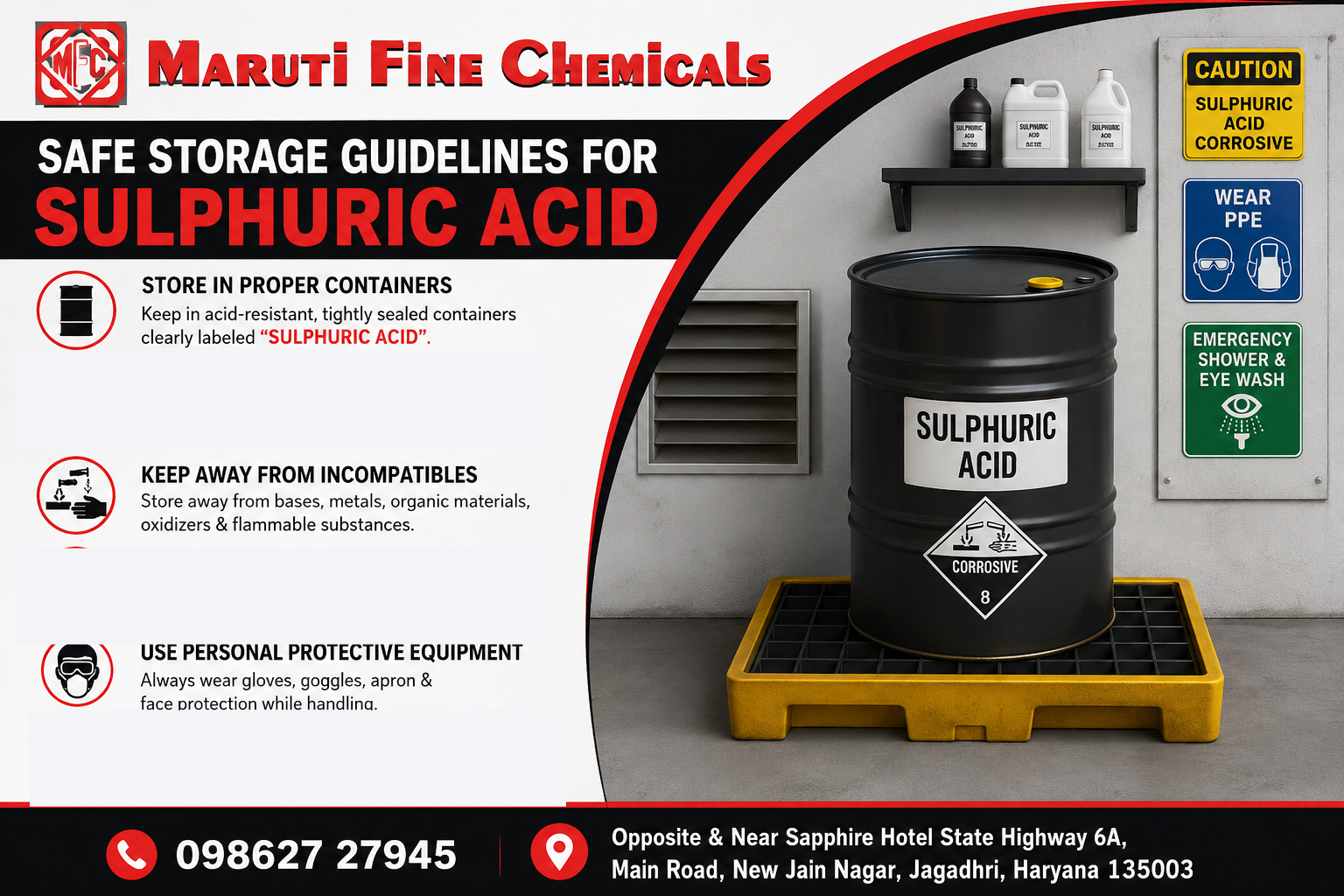
Introduction
Sulphuric Acid is one of the most widely used industrial chemicals across the world. It plays an important role in industries such as fertilizers, pharmaceuticals, textiles, petroleum refining, metal processing, batteries, and chemical manufacturing. Because of its highly corrosive nature, proper storage and handling are extremely important to maintain workplace safety and product quality.
Improper storage can lead to dangerous chemical reactions, equipment damage, environmental hazards, and serious injuries. Maruti Fine Chemicals understands the importance of safe chemical handling and reliable industrial storage practices for maintaining product quality and workplace safety.
Understanding the Nature of Sulphuric Acid
Sulphuric Acid is a strong mineral acid known for its corrosive and reactive properties. It reacts aggressively with water, metals, organic materials, and several chemicals. During dilution, the reaction releases a large amount of heat, which can become hazardous if not handled carefully.
Because of these properties, industries must use specially designed storage systems and handling procedures. Even small mistakes in storage conditions can increase the risk of leaks, corrosion, or accidents.
Key Factors in Safe Storage
- Temperature control
- Proper ventilation
- Use of compatible storage materials
- Regular inspection and maintenance
All these factors are essential parts of effective chemical storage management.
Importance of Proper Storage
Safe storage practices are essential for both operational efficiency and worker safety. Industrial facilities handling hazardous chemicals must ensure that storage areas are properly designed and maintained.
Benefits of Proper Sulphuric Acid Storage
Proper storage of Sulphuric Acid helps in:
- Preventing chemical leaks and spills
- Reducing corrosion damage
- Protecting employees from exposure
- Maintaining product purity
- Avoiding fire and reaction hazards
- Supporting environmental safety compliance
Many industries also invest in advanced monitoring systems to improve safety standards and reduce operational risks during chemical storage and transportation.
Proper Storage Location
The storage area should be carefully planned to minimize hazards and ensure quick emergency response if required.
Well-Ventilated Area
Storage spaces must have proper ventilation systems to prevent accumulation of harmful fumes. Good airflow helps maintain a safer working environment.
Cool and Dry Conditions
Sulphuric Acid should be stored away from direct sunlight, excessive heat, and moisture. High temperatures can increase pressure and corrosion risks.
Separate from Incompatible Chemicals
The chemical must never be stored near:
- Flammable materials
- Organic compounds
- Alkalis
- Chlorates
- Nitrates
- Water-reactive substances
Restricted Access
Only trained personnel should have access to the storage area. Warning signs and hazard labels should be clearly visible.
Safe Handling Practices
Storage safety also depends on proper handling procedures inside industrial facilities.
Use Protective Equipment
Workers handling Sulphuric Acid should wear:
- Chemical-resistant gloves
- Safety goggles
- Face shields
- Acid-resistant clothing
- Safety footwear
Proper protective equipment helps reduce the risk of chemical burns and exposure.
Use Correct Transfer Methods
Industrial pumps, pipelines, and transfer systems should be designed specifically for corrosive chemicals. Manual handling should be minimized whenever possible.
Avoid Water Contact
One of the most important safety rules is to never add water directly into concentrated acid. The reaction can produce violent splashing due to rapid heat generation.
Correct Dilution Method
Always add acid slowly into water during dilution.
Spill Prevention and Emergency Planning
Even with strong safety systems, industries must remain prepared for emergencies.
Secondary Containment Systems
Storage tanks should include bund walls or containment trays to control accidental leaks and prevent environmental contamination.
Emergency Showers and Eyewash Stations
Facilities should install emergency response equipment near storage zones to provide immediate assistance during accidental exposure.
Spill Response Kits
Industrial sites must maintain spill control materials such as:
- Neutralizing agents
- Absorbents
- Protective gear
Employee Training
Workers should receive regular safety training regarding:
- Chemical hazards
- Emergency procedures
- Leak response methods
- Safe handling techniques
- First aid measures
Prepared employees can respond faster and reduce the impact of industrial accidents.
Importance of Regular Inspection
Routine inspection and maintenance are essential for long-term safety.
Areas That Should Be Regularly Inspected
- Storage tanks
- Valves and fittings
- Transfer pipelines
- Ventilation systems
- Safety equipment
- Corrosion levels
Early identification of damage helps prevent major operational failures and reduces maintenance costs.
Digital monitoring systems are also becoming popular in the chemical industry because they improve real-time tracking and predictive maintenance capabilities.
Transportation and Packaging Safety
Storage safety does not end inside the warehouse. Transportation and packaging also require strict precautions.
Approved Containers
Sulphuric Acid should only be transported in certified containers designed for hazardous chemicals.
Secure Packaging
Leak-proof packaging helps maintain product integrity and reduces transportation risks.
Hazard Labels
Containers should include proper warning labels, handling instructions, and emergency contact details.
Trained Logistics Teams
Drivers and logistics personnel handling corrosive chemicals should receive professional safety training and emergency response knowledge.
Reliable transportation practices help industries maintain safe supply chains and reduce accident risks during delivery.
Environmental and Regulatory Compliance
Industries handling hazardous chemicals must follow government safety regulations and environmental guidelines.
Benefits of Regulatory Compliance
Compliance helps businesses:
- Maintain workplace safety
- Reduce environmental impact
- Avoid legal penalties
- Improve operational reliability
- Build industry trust
Industrial chemical storage systems should comply with local environmental rules, hazardous waste regulations, and occupational safety standards.
Sustainable chemical management practices are becoming increasingly important as industries focus more on environmental responsibility and worker protection.
Role of Reliable Chemical Suppliers
Choosing a reliable supplier also plays an important role in maintaining safety standards. High-quality chemicals with proper packaging and accurate documentation help industries reduce operational risks.
Many industries prefer working with experienced suppliers who understand industrial safety requirements and maintain consistent quality standards.
Maruti Fine Chemicals provides industrial chemicals for various applications while focusing on quality, packaging reliability, and safe supply practices for industrial operations.
Future of Chemical Storage Safety
Modern industries are increasingly adopting advanced technologies to improve chemical storage safety.
Emerging Trends in Chemical Safety
- Smart leak detection systems
- Automated monitoring sensors
- AI-based predictive maintenance
- Improved corrosion-resistant materials
- Digital safety tracking systems
These technologies help industries improve efficiency while reducing safety risks and maintenance challenges.
As industrial demand continues to grow, chemical safety management will remain a major priority across manufacturing sectors.
FAQs
1. What is the best material for storing Sulphuric Acid?
Common storage materials include carbon steel, HDPE containers, FRP tanks, and selected stainless steel grades depending on concentration and industrial requirements.
2. Can Sulphuric Acid be stored near other chemicals?
No. It should be stored away from incompatible substances such as alkalis, flammable materials, nitrates, chlorates, and water-reactive chemicals.
3. Why is ventilation important in storage areas?
Proper ventilation helps reduce the accumulation of harmful fumes and maintains a safer working environment for employees.
Conclusion
Safe storage of Sulphuric Acid is essential for protecting workers, equipment, and the environment. Because of its highly corrosive nature, industries must follow proper storage, handling, transportation, and inspection procedures at every stage.
Using compatible storage materials, maintaining ventilation, avoiding contamination, training employees, and conducting regular inspections can significantly reduce industrial risks.